
Buying Beats Online: 7 Costly Mistakes Every Artist Should Avoid
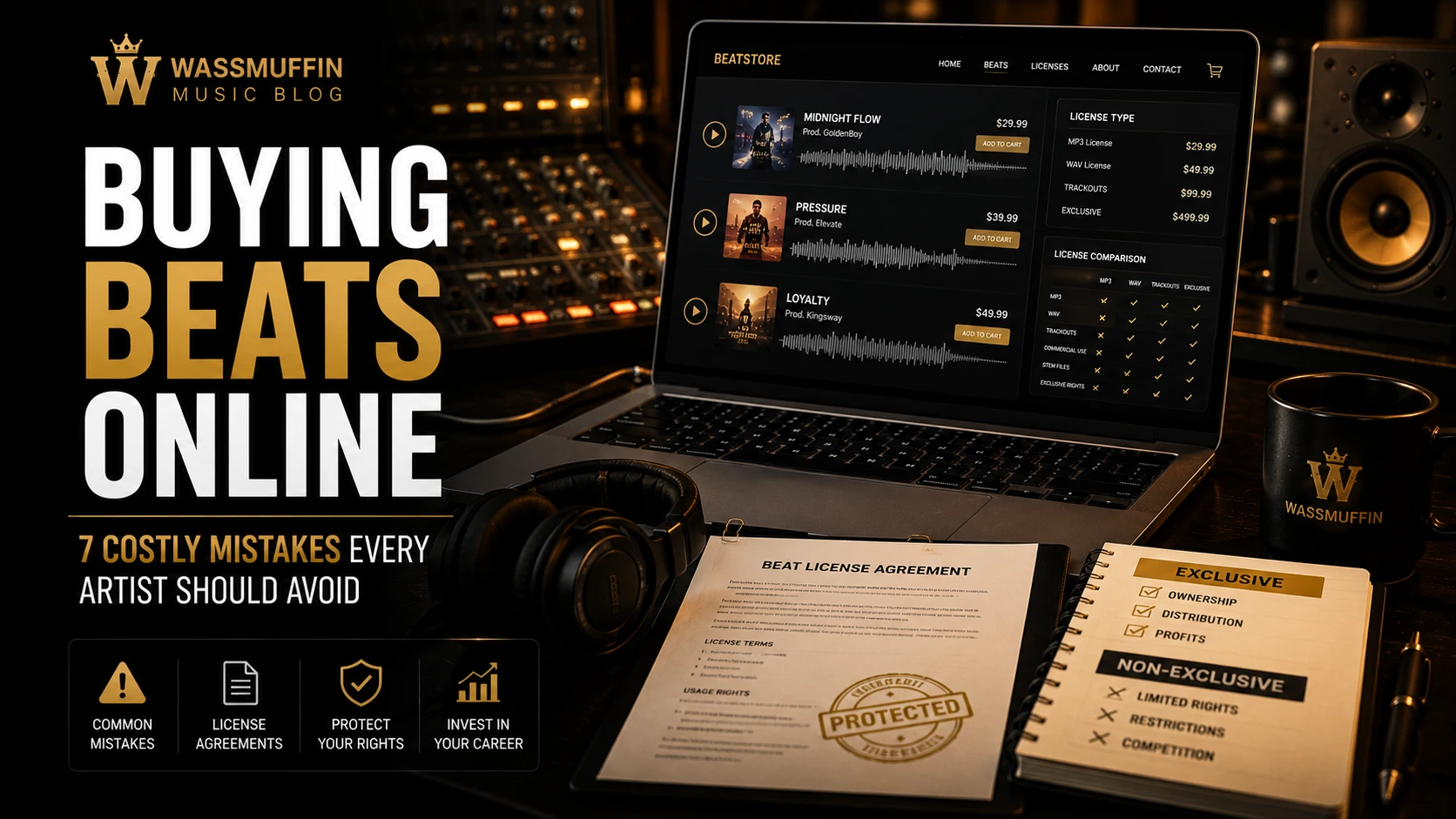
Buying beats online has never been easier. Independent artists now have access to thousands of instrumentals from producers around the world, covering everything from Hip Hop and Rap to Dancehall, Reggae and Caribbean-inspired music.
However, having more options does not always make the process easier.
Many artists rush into purchasing beats without understanding what they are buying. This can lead to wasted money, licensing issues and songs that never reach their full potential.
If you are planning on
buying beats online
,
here are seven costly mistakes every artist should avoid.
Before choosing an instrumental, you may also want to read our complete guide on
how to choose the right beat for your song
.
1. Buying With Your Eyes Instead of Your Ears
One of the biggest mistakes artists make is being influenced by flashy artwork, marketing or social media hype.
A professional cover image does not automatically mean the beat itself is right for your song.
Instead, focus on:
- The quality of the drums
- The melody and arrangement
- The overall energy
- The space available for vocals
- How the beat makes you feel
- Whether it inspires lyrics or melodies
The instrumental should inspire ideas before you even start writing lyrics.
If the beat does not spark creativity, keep looking.
You can explore different styles in the
Wassmuffin beat collection
and compare Hip Hop, Trap, Dancehall and melodic instrumentals before deciding.
2. Ignoring Beat Licensing Terms
Many artists purchase beats without properly reading the licensing agreement.
This can create problems later, especially if the song begins receiving streams, generating revenue or attracting attention.
Before purchasing a beat online, make sure you understand:
- Whether the beat is exclusive or non-exclusive
- What commercial rights are included
- Streaming limitations
- Monetisation permissions
- Distribution rights
- Music video rights
- Live performance rights
- Which audio files are included
- Whether track stems are included
Understanding beat licensing helps protect your music, your release and your investment.
Do not choose a licence based only on price. Select the option that matches how you plan to use the song.
3. Not Knowing the Difference Between Exclusive and Non-Exclusive Beats
This is one of the most common mistakes new artists make.
Exclusive Beats
When you purchase an exclusive beat licence, the producer will normally stop selling new licences for that instrumental according to the terms of the agreement.
However, exclusive rights do not automatically mean complete copyright ownership. Always read the licence carefully to understand publishing, producer credits and ownership terms.
Non-Exclusive Beats
Non-exclusive beats can normally be licensed to multiple artists under separate agreements.
This type of licence is often more affordable and can be suitable for independent artists who are building their catalogue, releasing music regularly or working with a limited budget.
Neither option is automatically better.
The right choice depends on:
- Your budget
- Your expected audience
- Your release strategy
- Your distribution plans
- Your promotional budget
- The rights included in the licence
Always understand exactly what type of licence you are purchasing before completing the transaction.
4. Choosing a Beat That Is Too Busy
Many producers create highly detailed instrumentals with multiple melodies, effects, samples and transitions.
While these beats can sound impressive on their own, they do not always leave enough room for vocals.
Remember:
Your voice should remain one of the main elements of the finished song.
If the beat is overcrowded, your vocals may struggle to stand out and the final mix can feel cluttered.
When previewing an instrumental, listen for space where you could add:
- Lead vocals
- Backing vocals
- Ad-libs
- Harmonies
- A strong chorus
- Vocal effects
Choosing an instrumental with enough space can make the recording and mixing process much easier.
For more help with this, read our guide on
how to choose a beat that suits your voice
.
5. Following Trends Too Much
Music trends change constantly.
Many artists search for the latest viral sound instead of developing their own identity.
While trends can provide inspiration, they should not control every creative decision.
A song that reflects your personality, vocal style and artistic direction may have more long-term value than a track created only to copy what is currently popular.
Choose beats that help strengthen your identity rather than make you sound exactly like another artist.
You can still experiment with different genres, including:
- Dancehall
- Hip Hop
- Trap
- Melodic Hip Hop
- Dark Trap
- Soulful Hip Hop
The goal is to find production that supports your sound rather than replaces it.
6. Not Testing the Beat Before Purchasing
Never buy a beat simply because the first few seconds sound good.
Spend time with the instrumental first.
Try to:
- Freestyle over it
- Write a short verse
- Create a chorus
- Experiment with melodies
- Record a quick voice note
- Test different flows
Ask yourself:
- Can I hear a complete song on this beat?
- Does the instrumental inspire ideas?
- Does it suit my voice?
- Can I create a strong chorus?
- Can I imagine performing it live?
If you struggle to connect with the beat after several attempts, it may not be the right instrumental for that particular song.
Dancehall artists can also read our dedicated guide on
how to choose the right Dancehall beat
.
If possible, you can also test your ideas in a
professional recording studio
where you can hear how your vocals interact with the instrumental through a proper recording setup.
7. Forgetting About Your Audience
Every song is created for someone.
Before purchasing an instrumental, think about who you want the song to reach and where people are most likely to hear it.
Different audiences may respond to different production styles.
For example:
- Hip Hop listeners may respond to strong drums, memorable samples and confident energy.
- Dancehall audiences may connect with rhythmic, energetic and melodic production.
- Melodic Rap listeners may prefer emotional chords and more space for vocals.
- Trap audiences may respond to darker melodies, heavy drums and atmospheric production.
Understanding your target listener can help you make smarter production decisions without sacrificing your own creative identity.
Recommended Wassmuffin Beats
If you are looking for instrumentals for your next release, here are several Wassmuffin beats worth previewing.
For Dancehall and Bouncy Songs
-
MONEY – Dancehall Beat
- AURORA – Dancehall/Hip Hop
- 22 – Bouncy Dancehall/Hip Hop
These styles may work well for rhythmic vocals, melodic hooks, energetic releases and Dancehall/Hip Hop crossover songs.
For Soulful and Melodic Hip Hop
-
MIDNIGHT – Chilled Soulful Hip Hop
- JM7Z – Soul Hip Hop
- BLUE – Guitar Led Melodic Hip Hop
- AFTERHOURS – Slow Melancholic Hip Hop
These beats may suit storytelling, emotional lyrics, melodic vocals and more reflective songs.
For Harder Hip Hop and Trap
-
RESPECT – Minimal Hard Hip Hop
- ALPHA – Bouncy Trap
- DANGER – Quirky Dark Trap
- COLD – Melodic Trap
These styles may suit confident verses, harder delivery, darker concepts and modern Trap-inspired releases.
Browse all Wassmuffin beats and preview the full collection.
Quick Checklist Before Buying a Beat Online
Before purchasing an instrumental, make sure:
- The beat suits your voice
- You can imagine a strong chorus
- The instrumental leaves enough space for vocals
- You have tested your flow over the beat
- You understand the licence terms
- The licence includes the files you need
- The beat fits your intended audience
- The instrumental supports your artistic direction
- You understand any streaming or commercial limitations
Taking a few extra minutes before purchasing can help you avoid expensive mistakes later.
Final Thoughts
A beat is the foundation of your song.
Choosing the wrong instrumental can limit the potential of strong lyrics, vocals and performances.
By understanding beat licensing, comparing exclusive and non-exclusive options, testing your ideas before buying and choosing instrumentals that fit your voice, you can make better creative and business decisions.
At
Wassmuffin Academy
,
our goal is to provide quality instrumentals that give artists a strong foundation for their next release.
Whether you are searching for Dancehall, Hip Hop, Trap, soulful or melodic production, take time to preview different beats and choose the instrumental that genuinely fits your song.
Ready to Find Your Next Beat?
Preview Dancehall, Hip Hop, Trap and melodic beats from Wassmuffin and choose the licence that fits your next release.
Frequently Asked Questions
What should I check before buying a beat online?
Check the licence terms, included audio files, streaming limits, commercial rights, music video permissions and whether the beat works naturally with your voice and flow.
Should I buy an exclusive or non-exclusive beat?
The right choice depends on your budget and release plans. Non-exclusive licences may suit many independent releases, while exclusive licensing may be considered for larger releases where broader rights are required.
How do I know if a beat is right for my song?
Freestyle, write a chorus or record a quick demo over the beat. If your vocals fit naturally and the instrumental inspires ideas, it may be a strong match.
Can multiple artists use the same beat?
Yes, if the instrumental is licensed non-exclusively. Multiple artists may legally release different songs using the same beat according to their individual licence agreements.
Can I release a song commercially with a purchased beat?
A suitable commercial licence may allow you to release and monetise your song according to the terms of the agreement. Always read the specific licence before publishing your music.
Where can I buy Dancehall and Hip Hop beats online?
You can browse Dancehall, Hip Hop, Trap and melodic instrumentals through the
Wassmuffin beat shop
and compare the available licence options before purchasing.






Comments
This post currently has no comments.